
Technology
-
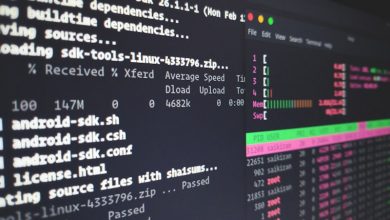
The Digital Nomad Infrastructure: How Remote Work Technology Actually Works in 2025
The 35-Million-Person Experiment In 2019, the number of American digital nomads — people who work remotely while traveling — was…
Read More » -

Why Open Source AI Models Are Winning (Even When Proprietary Models Are Better)
The Benchmark Paradox Here’s a strange fact about artificial intelligence in 2025: the most powerful models — the ones that…
Read More » -

The Satellite Internet War: Starlink versus Project Kuiper versus China’s Thousand Sails
Three Constellations, Three Visions For most of the internet’s history, getting online meant connecting to a wire in the ground.…
Read More » -
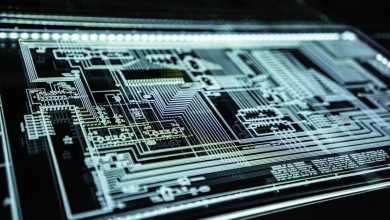
From React to HTMX: The Quiet Rebellion Against JavaScript Complexity
The Framework Tax If you started building web applications in the last decade, you probably learned that modern web development…
Read More » -
The Race for the 1-Nanometre Chip: Can Moore’s Law Survive Another Decade?
The Number That Defined an Industry In 1965, Gordon Moore scribbled a prediction on a napkin that would define the…
Read More » -
The Digital Nomad Infrastructure: How Remote Work Technology Actually Works in 2025
The pandemic-era experiment in remote work has evolved into a permanent restructuring of how millions of people live and work.…
Read More » -
Why Open Source AI Models Are Winning (Even When Proprietary Models Are Better)
On most standard benchmarks — MMLU, HumanEval, GSM8K — the best proprietary models from OpenAI, Anthropic and Google consistently outperform…
Read More » -
The Satellite Internet War: Starlink versus Project Kuiper versus China’s Thousand Sails
In 2019, SpaceX launched the first batch of Starlink satellites, initiating a project that would grow into the largest constellation…
Read More » -
From React to HTMX: The Quiet Rebellion Against JavaScript Complexity
In 2013, Facebook released React — a JavaScript library that would fundamentally reshape how web applications are built. A decade…
Read More » -
The Race for the 1-Nanometre Chip: Can Moore’s Law Survive Another Decade?
Gordon Moore’s famous observation — that the number of transistors on a microchip doubles roughly every two years — has…
Read More »